A Walk-Through Before the First Cold Snap
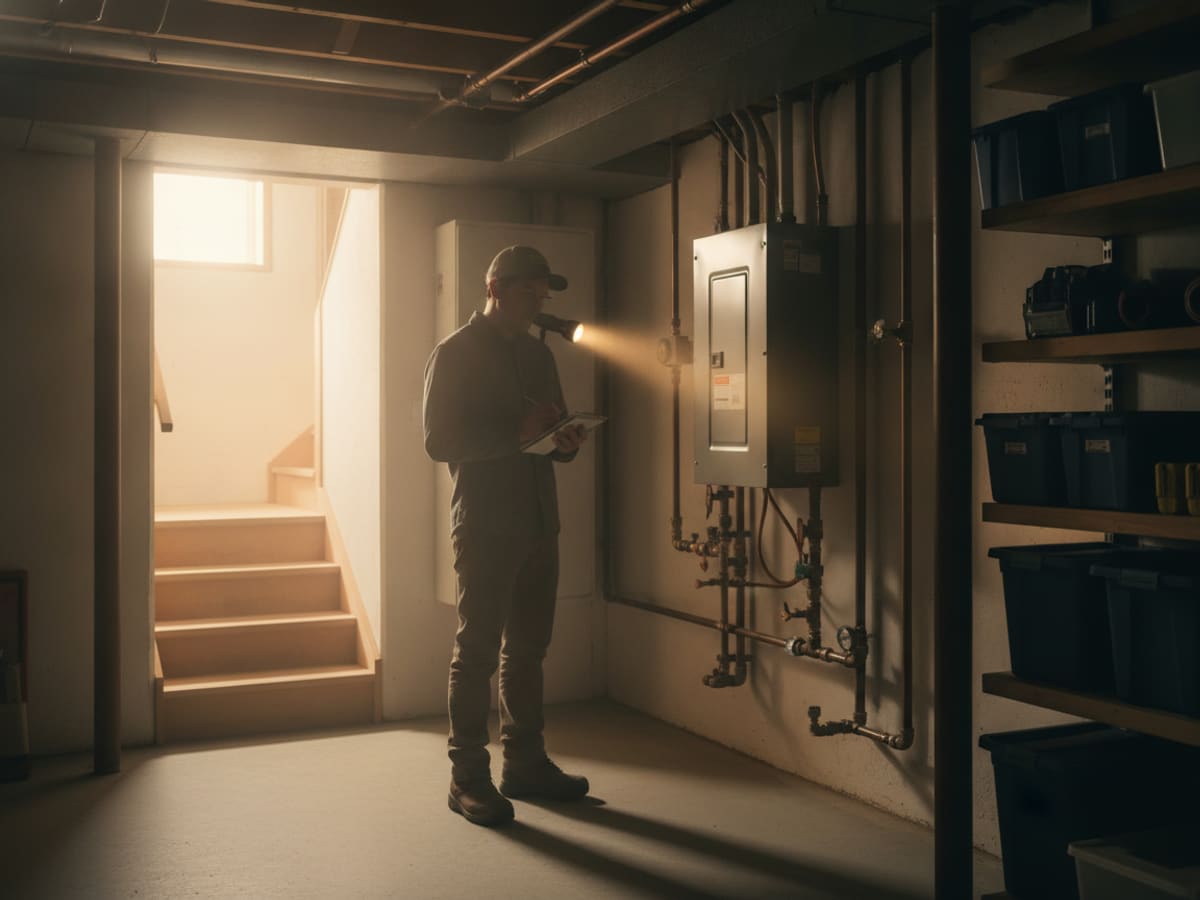
A calm, one-hour look around your home can head off the usual surprises when temperatures drop. Use this as a starting point for your own list.
Why a seasonal walk-through helps
Most winter household problems don't arrive all at once. They start small: a draft you ignored in October, a clogged gutter you meant to get to, a furnace filter that's been in place since spring. A single walk-through before the weather turns gives you a chance to catch these things while it's still comfortable to be outside.
You don't need special tools or a whole weekend. A flashlight, a notepad, a screwdriver, and about an hour or two will cover most of it. Write down what you find as you go. Some items you'll fix on the spot, and others will go on a list for later.
It also helps to do the walk in the same order each year. Starting inside with the heating system, moving to the windows and doors, then finishing outside makes it easy to build a habit.
Heating system basics to look at
Start with the part of the house you'll rely on most. You're not trying to repair anything here, just to notice whether things look and sound normal.
- Check the air filter. If it looks gray and clogged, replace it with the size your system calls for. The filter's frame usually lists the dimensions.
- Clear the area around furnaces, boilers, and space heaters. Boxes, laundry, and stored items should stay well back from anything that produces heat.
- Look at vents, registers, and radiators. Make sure furniture or rugs aren't blocking them, and dust them off.
- Turn the heat on for a short test run while the weather is still mild. Listen for unusual rattling or banging, and notice any odd smells. A brief dusty smell on first startup is common, but it should fade quickly.
- If you have a fireplace or wood stove, make sure the damper opens and closes properly.
Windows, doors, and exterior seals
Drafts are one of the easiest things to find and often one of the cheapest to address. Pick a breezy day and move slowly around each window and exterior door.
Hold your hand near the edges of the frame and feel for moving air. If you'd rather not rely on touch, a lit stick of incense or a thin strip of tissue held near the edge will wave around where air is leaking through.
Look closely at the weatherstripping around doors. If it's cracked, flattened, or pulling away, it's due for replacement. Check the door sweep at the bottom, too. If you can see daylight under a closed door, air is getting through.
Then look at the caulk around window frames, trim, and where pipes or wires enter the house. Caulk that has cracked or shrunk away from the surface can let in cold air and moisture. Scrape out the loose material and apply fresh caulk suited to the surface and location.
Finally, make sure windows latch fully and that storm windows or screens, if you use them, are in the right place for the season.
Alarms and safety devices
Closed-up houses and heating equipment make this the right time to test your safety devices. Take care of them in one pass.
- Press the test button on every smoke alarm and carbon monoxide alarm in the house.
- Replace batteries where needed, following the instructions printed on the device.
- Check the manufacture date on each alarm, usually printed on the back. Alarms wear out over time, and the label or manual will tell you when to replace them.
- Confirm you have alarms on each level and near sleeping areas, as local guidance typically recommends.
- Check that your fire extinguisher, if you have one, is accessible and that its gauge shows it's ready.
Take a minute to talk with everyone in the household about what to do if an alarm sounds, including where to meet outside.
Outdoor spigots and gutters
Water is the main outdoor concern as temperatures drop. Frozen water expanding inside a pipe can cause damage you won't notice until the thaw.
Disconnect garden hoses from outdoor faucets and drain and store them. A hose left attached can trap water in the spigot. If your home has a shutoff valve for exterior faucets inside the house, your home's documentation or a professional can help you identify it. Let any remaining water drain before winter sets in.
Look at your gutters and downspouts next. Clear out leaves and debris, and make sure downspouts direct water several feet away from the foundation. Clogged gutters can overflow, and in freezing weather that water can turn to ice along the roofline and walkways.
Use a stable ladder, have someone nearby, and wear sturdy gloves. If working at height doesn't feel safe, it's reasonable to skip it and hire someone.
While you're out there, walk the perimeter. Look for gaps in siding, cracks in the foundation, and branches hanging over the roof that could come down in snow or ice.
Knowing when to book a professional
Some items on your list are good weekend projects. Others call for someone with training and the right equipment.
Consider booking a professional if you notice any of the following:
- Your heating system makes grinding, banging, or other unusual noises, or it struggles to start.
- You see rust, soot, or scorch marks around a furnace, boiler, or water heater.
- A fireplace or chimney hasn't been inspected in a while, particularly before regular use.
- You find signs of roof damage, such as missing or lifted shingles.
- Water stains appear on ceilings or walls.
- You can't locate or operate an exterior water shutoff.
Many heating professionals offer seasonal inspections, and it's usually easier to get an appointment before the first cold snap than during it.
Once your list is done, tuck it somewhere you'll find it next fall. A short, repeatable routine is the real upgrade here, and it makes every future winter a little less of a surprise.